
Chicken fettuccine alfredo is the dish that looks like it needs a reservation and takes 35 minutes at home. Ribbons of fettuccine are tossed in a glossy garlic and Parmesan cream sauce, then topped with juicy, golden-seared chicken. There is no jarred sauce and no flour-thickened paste, just cream, butter, garlic, and real cheese.
The sauce is where this chicken fettuccine alfredo is won or lost, so most of what follows is about getting it silky instead of grainy, oily, or thin. Once you know the handful of rules, you can make it without a recipe.
Quick facts: this chicken fettuccine alfredo takes about 35 minutes, serves 6, and uses one pot for the pasta and one skillet for the chicken and sauce.
What Is Chicken Fettuccine Alfredo?
The original Alfredo from Rome was only pasta, butter, and Parmesan, tossed until the cheese and starchy pasta water turned into a sauce. The creamy version most of us grew up with, made with heavy cream and often garlic, is the American restaurant adaptation, and it is the one made here. Adding sliced chicken breast turns the side dish into a full dinner.
Three things define a good chicken fettuccine alfredo. The sauce should coat the noodles without pooling at the bottom of the plate. It should taste of Parmesan, not just cream. And the chicken should be tender and seasoned, not an afterthought.
The Ingredients Behind the Sauce
This homemade alfredo sauce has only a few components, so each one matters.
- Heavy cream (2 cups). It has enough fat to stay smooth when heated. Half-and-half and milk can split or turn thin.
- Butter (4 tablespoons). Adds richness and carries the garlic flavor.
- Garlic (4 cloves). Cooked briefly in the butter so it turns sweet, not sharp.
- Parmesan (1 1/2 cups, finely grated). Use a wedge of real Parmigiano Reggiano and grate it fine. Bagged shredded cheese is coated with anti-caking starch, which can make the sauce gritty.
- Pasta water (about 1/2 cup). The starchy water thins the sauce without diluting it, and helps it cling to the noodles.
- Nutmeg (a pinch). Not enough to taste, just enough to make the cream and cheese taste more rounded.
- Fettuccine (1 pound). Its wide, flat ribbons carry more sauce than thin spaghetti.
The chicken is simple: two large boneless, skinless breasts (about 1 1/2 pounds), olive oil, salt, pepper, garlic powder, and paprika.
Substitution Notes
- Heavy cream: half-and-half works if you simmer it a little longer and add the cheese very gradually, but the sauce will be less rich. Milk is not a safe swap here, it is too thin and can curdle.
- Chicken breast: thighs work just as well and are more forgiving. Cook them 6 to 7 minutes per side.
- Fettuccine: linguine, pappardelle, or penne all work. Wide, flat noodles hold the sauce best.
- Parmesan: Pecorino Romano can stand in, but it is saltier, so hold back the added salt and taste first.
- Butter: no good swap here. It carries the garlic flavor, and olive oil changes the taste of the sauce.
How to Make Chicken Fettuccine Alfredo
- Prep the chicken. Slice each chicken breast in half horizontally to make four thin cutlets. Pat dry and season both sides with the salt, pepper, garlic powder, and paprika. Even thickness is what keeps the chicken from drying out.
- Boil the pasta. Cook the fettuccine in well-salted water until al dente, about 1 minute less than the package says. Scoop out 1 cup of pasta water before draining.
- Sear the chicken. Heat the olive oil in a large, deep skillet over medium-high heat. Cook the chicken 5 to 6 minutes per side, until deeply golden and an instant-read thermometer reads 165°F. Move it to a cutting board to rest, then slice. Do not wash the skillet; the browned bits flavor the sauce.

- Start the sauce. Lower the heat to medium and melt the butter in the same skillet. Add the garlic and cook for 30 seconds, until fragrant but not browned.
- Add the cream. Pour in the cream and bring to a gentle simmer. Cook 4 to 5 minutes, stirring, until it thickens slightly and coats the back of a spoon.
- Add the cheese. Reduce the heat to low. Add the Parmesan a handful at a time, whisking until each addition melts before adding the next. Stir in the salt, pepper, and nutmeg.
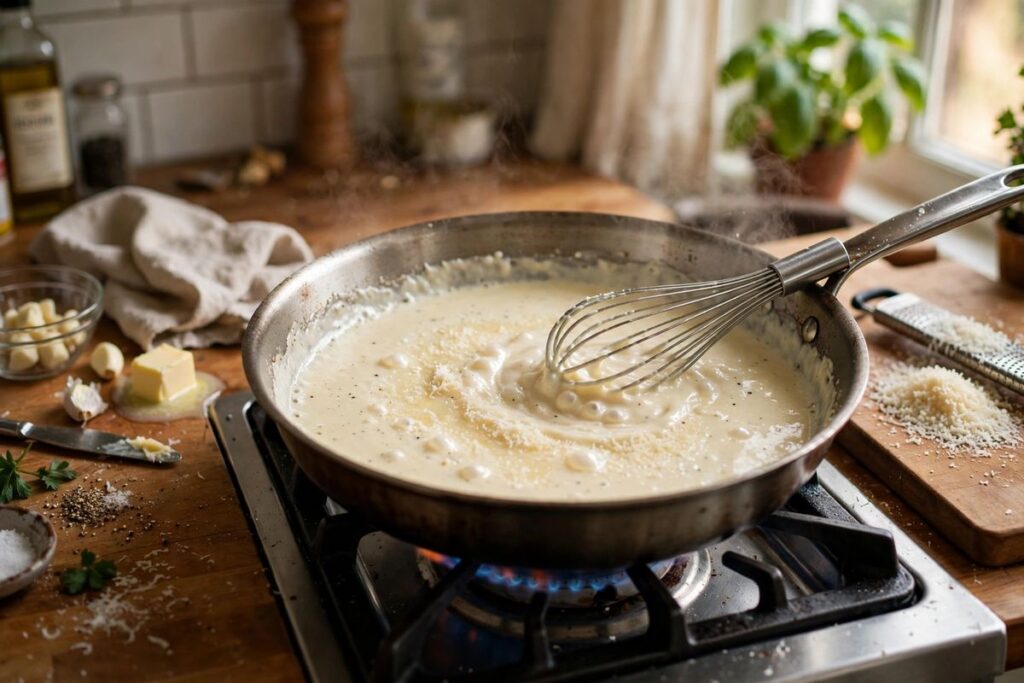
- Toss. Add the drained pasta and toss with tongs until every strand is coated. Add pasta water, a few tablespoons at a time, until the sauce is glossy and loose. It will tighten as it sits, so make it a little looser than you want.
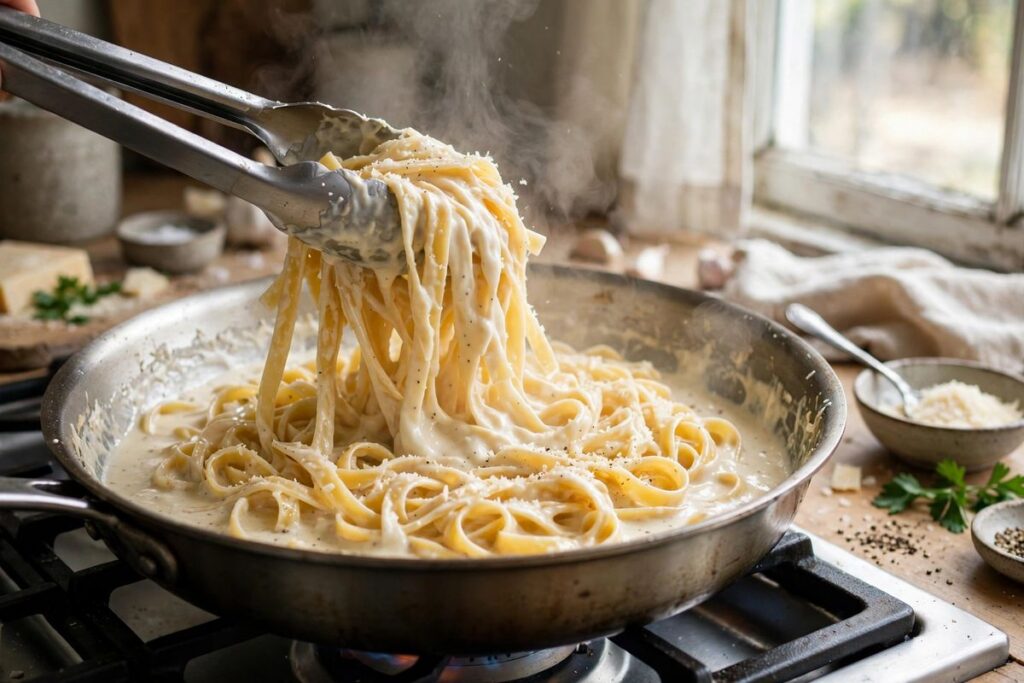
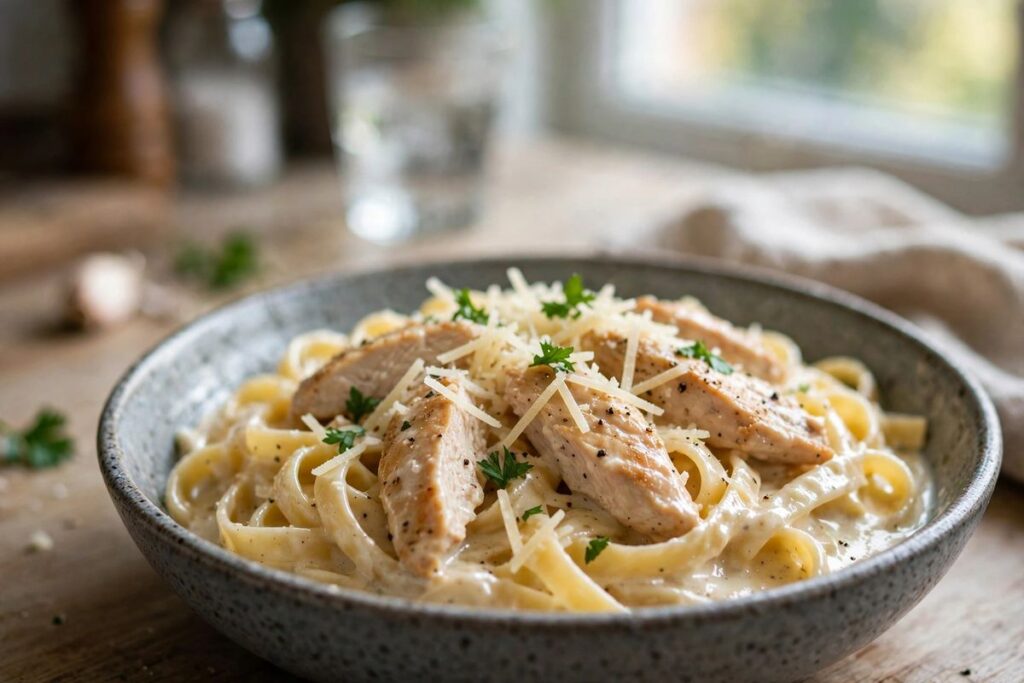
- Serve. Divide among warm bowls, top with the sliced chicken, and finish with parsley and extra Parmesan.
Keep the Sauce Smooth: A Troubleshooting Guide
| Problem | Why it happens | Fix |
|---|---|---|
| Grainy or clumpy sauce | Cheese added over high heat, or pre-shredded cheese | Keep the heat low, add the cheese gradually, and grate your own |
| Oily, split sauce | Sauce boiled hard after the cheese went in | Never boil once the cheese is in; whisk in a splash of pasta water to bring it back |
| Thin, watery sauce | Cream not simmered long enough | Simmer the cream 4 to 5 minutes before adding cheese |
| Sauce too thick or sticky | It tightened as it sat | Loosen with warm pasta water or milk, a tablespoon at a time |
| Bland sauce | Not enough salt or cheese | Season the sauce at the end and add more Parmesan |
Cooking the Chicken So It Stays Juicy
Thin cutlets cook quickly and evenly. Do not move them around for the first few minutes, because that is what builds the golden crust. If your breasts are very large, pound the thick end gently so the cutlets are uniform.
The USDA’s safe minimum for chicken is 165°F (see the USDA safe temperature chart). Chicken thighs work just as well in chicken fettuccine alfredo and are more forgiving; cook them 6 to 7 minutes per side. In a rush, skip the searing and fold in about 3 cups of shredded rotisserie chicken at the end.
Easy Ways to Change It Up
- Broccoli: add 3 cups of small broccoli florets to the pasta water for the last 2 minutes of cooking.
- Mushrooms: saute 8 ounces of sliced mushrooms in the skillet before the garlic.
- Shrimp: swap the chicken for seared shrimp, or try the spicier Cajun shrimp pasta.
- Sun-dried tomatoes: stir in 1/3 cup chopped tomatoes with the cream for a sweet, tangy contrast.
- Gluten-free: use a gluten-free fettuccine and cook it just to al dente, since it softens faster.
Optional Add-ins
- Broccoli: stir in 3 cups of small florets, added to the pasta water for the last 2 minutes of cooking.
- Mushrooms: saute 8 ounces of sliced mushrooms in the skillet before the garlic.
- Shrimp: swap the chicken for seared shrimp.
- Sun-dried tomatoes: stir in 1/3 cup chopped tomatoes with the cream for a sweet, tangy contrast.
What to Serve With It
This chicken fettuccine alfredo is a rich dish, so something fresh helps. A salad of arugula with lemon vinaigrette, garlic bread, or roasted asparagus all work. For a cozy pasta week, rotate it with the chicken tortellini soup.
Make Ahead
- The sauce is best fresh, because it thickens and can split when reheated. If you must prep ahead, grate the cheese, slice the garlic, and cook the chicken in advance, then make the sauce right before serving.
- Leftovers: refrigerate within 2 hours and eat within 3 to 4 days. Reheat gently in a skillet over low heat with a splash of milk or cream, stirring until smooth and steaming hot.
Storing and Reheating
Refrigerate leftover chicken fettuccine alfredo within 2 hours in an airtight container and eat within 3 to 4 days. Alfredo sauce thickens a lot as it cools. Reheat in a skillet over low heat with a splash of milk or cream, stirring gently until smooth and steaming hot (165°F). Microwaving can split the sauce, so use short bursts at 50 percent power if you must. Freezing is not recommended because cream sauces separate when thawed.
Chicken Fettuccine Alfredo FAQ
Can I make the sauce ahead?
The sauce for chicken fettuccine alfredo is best fresh, because it thickens and can split when reheated. If you must prep ahead, grate the cheese, slice the garlic, and cook the chicken in advance, then make the sauce right before serving.
Can I use milk instead of heavy cream?
Not without changes. Milk is too thin and can curdle. If you want a lighter version, use half-and-half, simmer it a little longer, and add the cheese very gradually, but the sauce will be less rich.
Do I need to add flour or cream cheese?
No. Real Parmesan and simmered cream thicken the sauce on their own. Flour and cream cheese make it heavier and change the flavor.
What is the best pasta for alfredo?
Fettuccine is the classic, but linguine, pappardelle, or even penne work. Wide, flat noodles hold the sauce best.
Why does my sauce taste flat?
Usually it needs salt, more Parmesan, or a pinch of black pepper. A tiny pinch of nutmeg and a squeeze of lemon at the end also help.
Time to Eat
Simmer the cream, add the cheese slowly over low heat, and save some pasta water. Those three habits are the difference between a restaurant-style chicken fettuccine alfredo and a clumpy one. Serve this chicken fettuccine alfredo hot, because the sauce is at its best in the first few minutes.
Chicken Fettuccine Alfredo
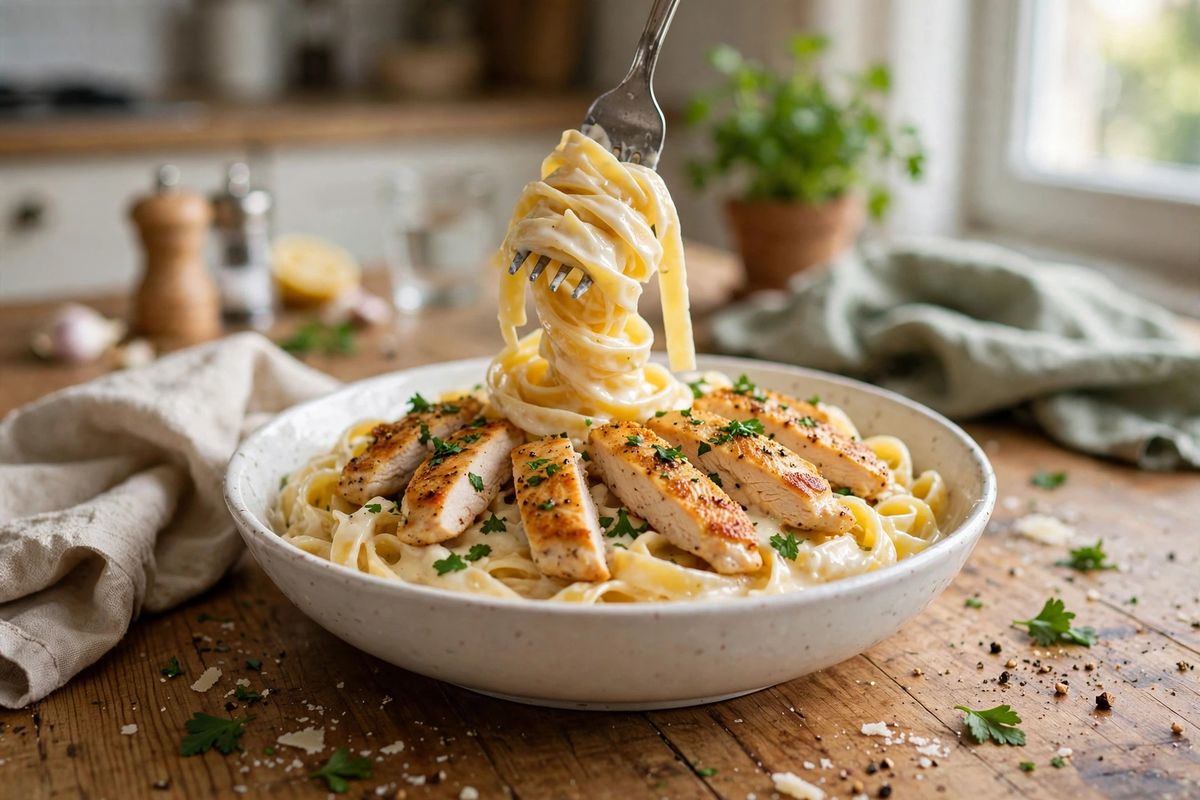
Chicken Fettuccine Alfredo
Ingredients
Equipment
Method
- Slice each chicken breast in half horizontally to make four cutlets. Season with 1/2 teaspoon salt, 1/2 teaspoon pepper, the garlic powder, and paprika.
- Boil the fettuccine in salted water until al dente. Reserve 1 cup of pasta water, then drain.
- Heat the oil in a large skillet over medium-high heat. Sear the chicken 5 to 6 minutes per side until it reaches 165°F. Rest, then slice. Keep the browned bits in the skillet.
- Lower the heat to medium. Melt the butter, add the garlic, and cook 30 seconds.
- Add the cream and simmer 4 to 5 minutes until slightly thickened.
- Reduce the heat to low and whisk in the Parmesan gradually. Stir in the remaining salt and pepper and the nutmeg.
- Add the pasta and toss, loosening with pasta water until glossy.
- Top with the sliced chicken, parsley, and extra Parmesan.
Leave a Reply